The Chip Paradox
How US Sanctions Built China's AI Industry

In December 2025, a curious scene unfolded in the semiconductor world. The United States government announced it would allow Nvidia to sell its advanced H200 AI chips to China—under certain conditions. At the very same time, China’s Ministry of Industry and Information Technology issued a directive of its own: any domestic company wishing to purchase these American chips must first apply for a license and explain why domestically produced alternatives cannot meet their needs.
Why would the country being offered cutting-edge technology set up barriers to receiving it? This seemingly contradictory picture reveals a deeper story—one in which American export controls have produced precisely the opposite of their intended effect.
The Backfire: When Sanctions Breed Strength
When the United States placed Huawei on its Entity List in 2019, the conventional wisdom was clear: cut off from American technology, the Chinese telecommunications giant would wither. Its smartphone business would collapse. Its 5G ambitions would stall. The company, many predicted, would fade into irrelevance within a few years.
Six years later, the results tell a different story. Huawei’s global market share in telecommunications equipment has actually grown—from 29% in 2018 to between 31% and 34% in 2024. In China’s smartphone market, where the company was expected to disappear entirely, Huawei and its spinoff Honor have recovered from a combined 5% market share in 2021 to an average of 29% between 2022 and 2024. Its Ascend series AI chips now command approximately 40% of China’s domestic AI chip market, making Huawei the country’s largest AI chip supplier. Far from collapsing, the company has emerged as the flagship of China’s push for technological self-reliance.
The transformation required extraordinary effort. According to industry reports, Huawei replaced more than 13,000 components in its products and redesigned over 4,000 circuit boards to eliminate dependence on American suppliers. Between 2019 and 2024, the company added more than 17,000 research and development personnel to its workforce. Its homegrown operating system, HarmonyOS, now runs on more than one billion devices. The company’s research and development spending reached 20% of revenue—an intensity that few global technology firms can match. From 2013 to 2020, Huawei’s R&D growth rate was three times that of its competitors, a pace that the sanctions only accelerated.
Meanwhile, American companies have paid a steep price for the sanctions they once championed. The Information Technology and Innovation Foundation estimates that US technology firms lost at least $33 billion in sales to Huawei between 2021 and 2024. Nvidia alone expects to lose $15 to $16 billion in 2025 due to restrictions on its H20 chip exports. Qualcomm, Micron, AMD—the roster of American companies suffering from lost Chinese business continues to grow.
The foundation’s assessment was blunt: “Sanctioning Huawei and trying to hobble the company has proven to be both arrogant and self-defeating,” as the restrictions accelerated rather than impeded Chinese technological independence.
The Application Advantage: Where Chips Meet Reality
Yet sanctions alone do not explain China’s chip industry momentum. Restrictions may have provided the catalyst, but the fuel has come from something else entirely: an abundance of real-world applications hungry for AI processing power.
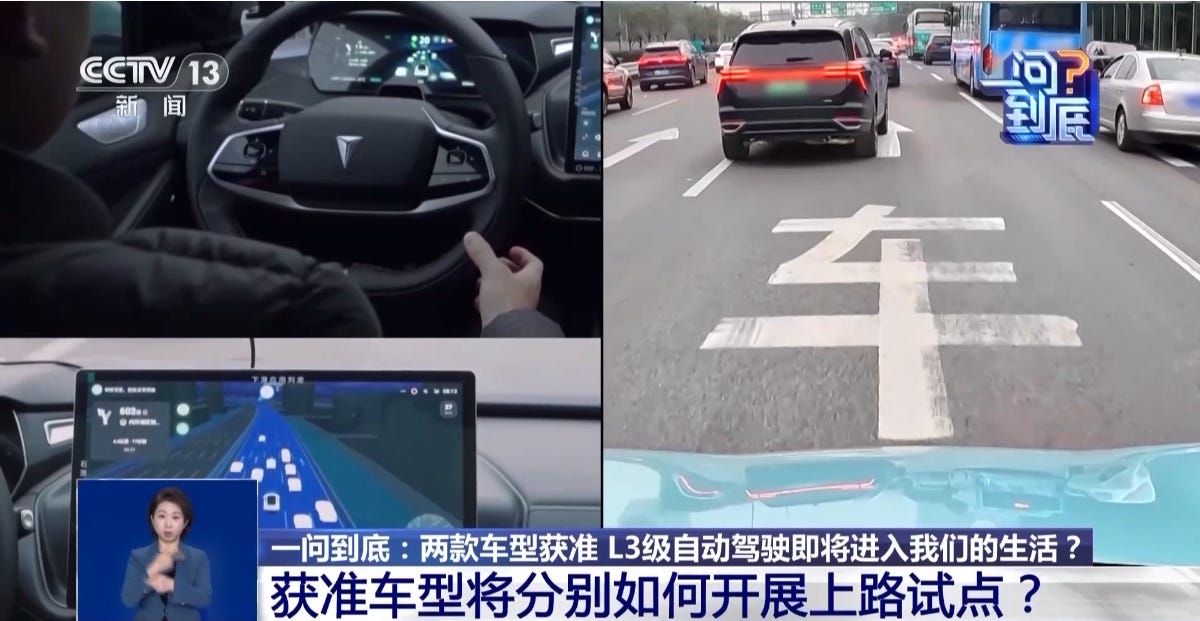
Consider the automotive sector. Horizon Robotics, a Chinese company founded in 2015, has become a dominant force in advanced driver assistance systems. Its Journey 6 chip series spans computing power from 10 TOPS to 560 TOPS, covering everything from basic lane-keeping to sophisticated autonomous driving features. The company holds over 40% of China’s ADAS chip market and delivered 2.9 million units in 2024 alone. BYD, SAIC, Chery, and even Volkswagen have integrated Horizon’s chips into their vehicles. Industry analysts project that 75% to 80% of Chinese automobiles will feature Level 2 or Level 3 autonomous driving capabilities by 2025—creating massive demand for domestically produced AI chips.
The application ecosystem extends far beyond cars. China now operates over 200 million industrial robots—the world’s largest installed base—with nearly 60% of new installations in 2024 coming from domestic manufacturers. The government has committed $138 billion to a national venture fund for robotics, AI, and frontier technologies. More than 600 intelligent computing center projects have launched nationwide, with total AI computing power reaching 788 EFLOPS. These centers deploy chips from multiple domestic suppliers—Huawei’s Ascend, Cambricon’s MLU series, and Hygon’s DCU accelerators among them. Beijing has set an ambitious target: by 2027, the capital’s intelligent computing centers should achieve 100% domestic technological self-reliance.
This breadth of applications marks a structural difference from the American AI landscape. While US AI development concentrates heavily on large language models and cloud-based training, Chinese AI chips find deployment across manufacturing floors, electric vehicles, agricultural automation, and logistics networks. Each deployment generates performance feedback that drives the next generation of chip improvements—a virtuous cycle that pure laboratory research cannot replicate.
The Cost and the Value: A Pragmatic Assessment
Honest assessment requires acknowledging what this technological independence has cost. The gaps between Chinese and American chips remain real and significant.
Huawei’s Ascend 910C achieves roughly 60% of the Nvidia H100’s inference performance. Producing chips of equivalent capability in China costs two to three times what it would at TSMC or Samsung. Huawei’s CloudMatrix 384 system, which clusters 384 Ascend chips to deliver 300 petaflops of computing power, consumes 4.1 times the electricity of Nvidia’s GB200 NVL72 system. The technology gap stands at approximately two to three years—a substantial deficit in an industry where each generation represents a major leap.
Yet this deficit has purchased something that pure efficiency metrics cannot capture: technological sovereignty. Huawei’s CANN software ecosystem—the bridge between AI training frameworks and Ascend chips—has attracted 3.3 million developers and 2,500 industry partners. These collaborations have produced more than 5,800 commercial solutions deployed across finance, energy, government, and telecommunications. In August 2025, Huawei announced it would fully open-source CANN under the Mulan Permissive Software License, choosing a fundamentally different approach from Nvidia’s proprietary CUDA ecosystem that has dominated AI development for nearly two decades. By September, all operators were available on the GitCode community; by December, core software components including domain acceleration libraries and the graph engine followed. The company also established a CANN Technical Steering Committee to guide community-driven development—a governance model designed to encourage adoption beyond Huawei’s own ecosystem.
The trajectory of domestic chip adoption tells its own story. China’s AI chip localization rate stood at 17% in 2023. Industry analysts project it will reach 46% in 2025 and 55% by 2027—a transformation that would have seemed inconceivable a decade ago.
Perhaps most telling is how Chinese AI companies have learned to maximize performance within constraints. On December 1, 2025, DeepSeek released V3.2—the first open-source model to match GPT-5’s capabilities while achieving gold-medal performance on the International Mathematical Olympiad and International Olympiad in Informatics. The V3.2-Speciale variant scored 35 out of 42 points on IMO 2025, solved 10 of 12 problems at the ICPC World Finals, and outperformed GPT-5 on the AIME 2025 math benchmark with 96.0% accuracy versus 94.6%. What makes this achievement remarkable is not just the results but how they were obtained. DeepSeek’s new Sparse Attention mechanism reduces inference costs by 50 to 75 percent while maintaining output quality. Within days of the release, Huawei’s Ascend team and the CANN community published integration guides for running V3.2 on domestic hardware. Cambricon updated its vLLM-MLU framework for compatibility. Hygon announced “zero-wait” deployment support through its DTK software stack. The ecosystem had prepared itself. When OpenAI’s Sam Altman warned that “if we don’t do open source, the world will primarily be built on Chinese open-source models,” DeepSeek V3.2 had already begun proving him right.
A Paradox Resolved
The H200 licensing requirement with which we began now makes perfect sense. China’s restrictions on purchasing American chips are not a sign of weakness but of confidence—a signal that domestic alternatives have matured enough to warrant protection and promotion.
This is not to minimize the remaining challenges. Chinese chips still lag in raw performance. Software ecosystems remain less developed than CUDA’s decades-long head start. The costs of indigenous development fall heavily on companies and taxpayers. These realities deserve acknowledgment, not dismissal.
But for observers in the Global South, China’s experience offers a different lesson than either triumphalism or skepticism would suggest. Western technology restrictions are not insurmountable barriers. Technological sovereignty demands investment, patience, and tolerance for inefficiency—but it may be the only path to avoiding permanent dependence on foreign systems and foreign political decisions.
China is already becoming an alternative supplier of AI infrastructure for developing nations. Along the Belt and Road, Chinese companies have built more than 1.9 million 5G base stations. In Central Asia, partnerships are emerging to construct modular intelligent computing centers powered by domestic chips. China’s 2025 Global AI Governance Action Plan explicitly emphasizes support for developing countries’ AI infrastructure—a policy framework that positions Chinese technology as an alternative to Western systems. For countries navigating their own paths toward technological development, the chip paradox demonstrates that the rules of the game can be rewritten by those determined enough to try.
The semiconductor world is splitting into parallel ecosystems. For much of the Global South, this may represent not a threat but an opportunity—a chance to build digital foundations on terms of their own choosing.