The AI Mandate
From a State Council Dispatch to a Village Cadre's Daily Work

On August 26, 2025, China's State Council released a foundational policy document, "Guo Fa" (short for Guówùyuàn Fāwén, or 'State Council Dispatch') [2025] No. 11, officially launching a nationwide "AI+" action plan. The document's arrival was perfectly timed, landing in a society already buzzing with an intense interest and optimism towards Artificial Intelligence, a sentiment palpable since the conclusion of the World AI Conference (WAIC) in Shanghai weeks earlier. It served as a state-level endorsement of this public enthusiasm, transforming a technological trend into a national strategic imperative.
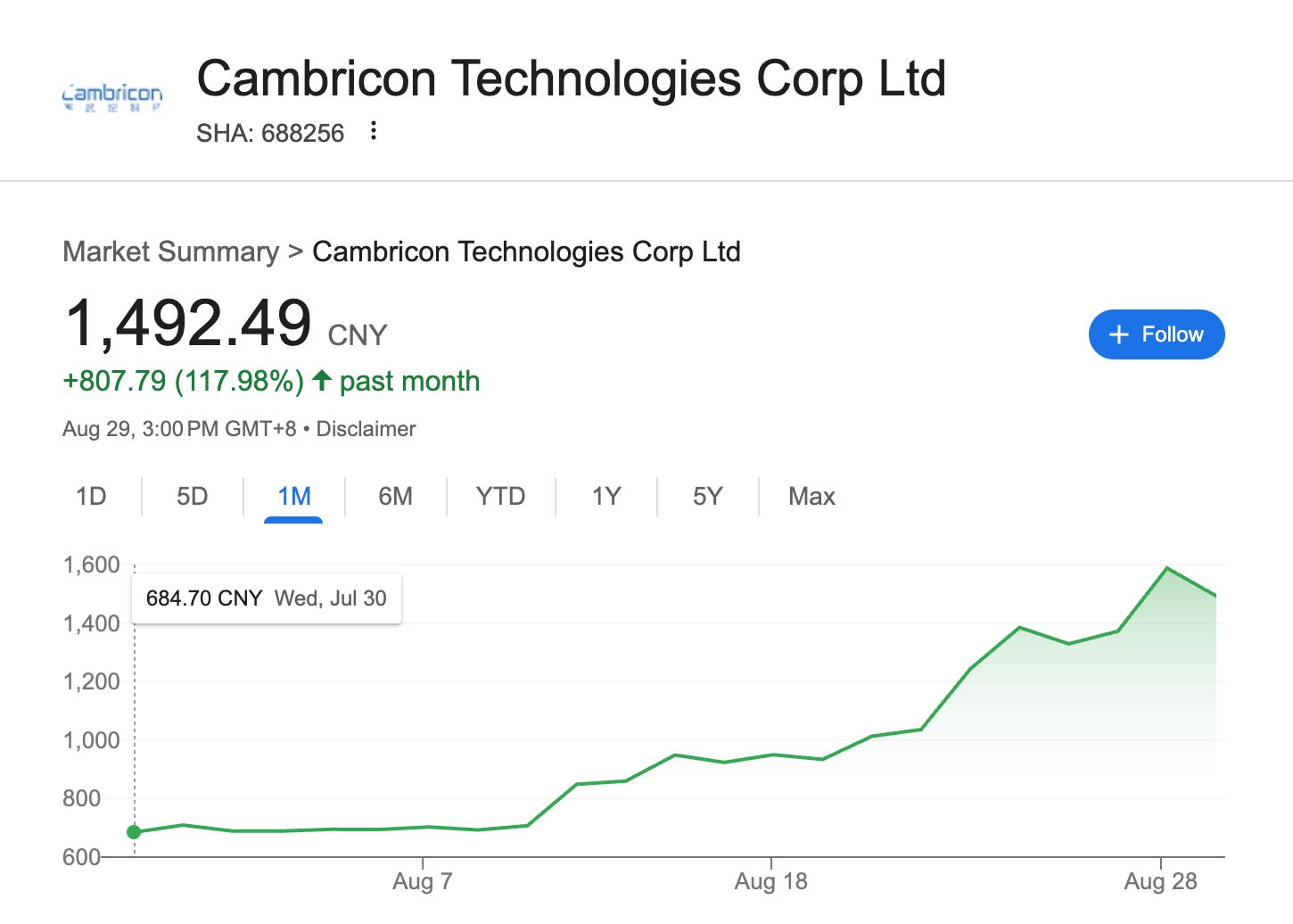
This moment carries a distinct echo of the past, reminiscent of the release of "Guo Fa [2000] No. 18" twenty-five years ago. That document became the starting gun for a golden age for China's software industry. In the decade that followed its release, the industry's market size grew to exceed 1.3 trillion RMB, achieving a compound annual growth rate of 43%. This historical precedent provides a crucial context for understanding the potential impact of the 2025 "AI+" plan.
The Blueprint Itself: What Future Does "AI+" Envision?
At its core, the "AI+" plan outlines a vision of AI as a foundational infrastructure, much like electricity or the internet, to be woven into every thread of the nation's fabric. The document is sweeping in its scope, detailing a comprehensive strategy to integrate AI across science, industry, consumption, public welfare, governance, and global cooperation.
First, it positions AI as an accelerator for scientific and technological innovation. The plan calls for using AI to pioneer new research paradigms that can speed up major scientific discoveries, drive innovation in engineering and product development, and even introduce new methodologies to the study of social sciences.
Second, it paints a picture of a profound productivity leap in the real economy. In the industrial sector, the vision is for the full-cycle intelligence of design, production, and services. In agriculture, it promotes the development of smart machinery, agricultural drones, and AI-driven breeding technologies, aiming to empower the nation's primary and secondary industries.
Third, on the level of personal life, the document aims to create richer consumer experiences and a higher quality of life. This includes fostering new generations of intelligent products like smart-connected vehicles and smart home devices, while also exploring AI's role in assistive medical diagnostics, elder care, and cultural creation to build what the text calls a "more warm intelligent society."
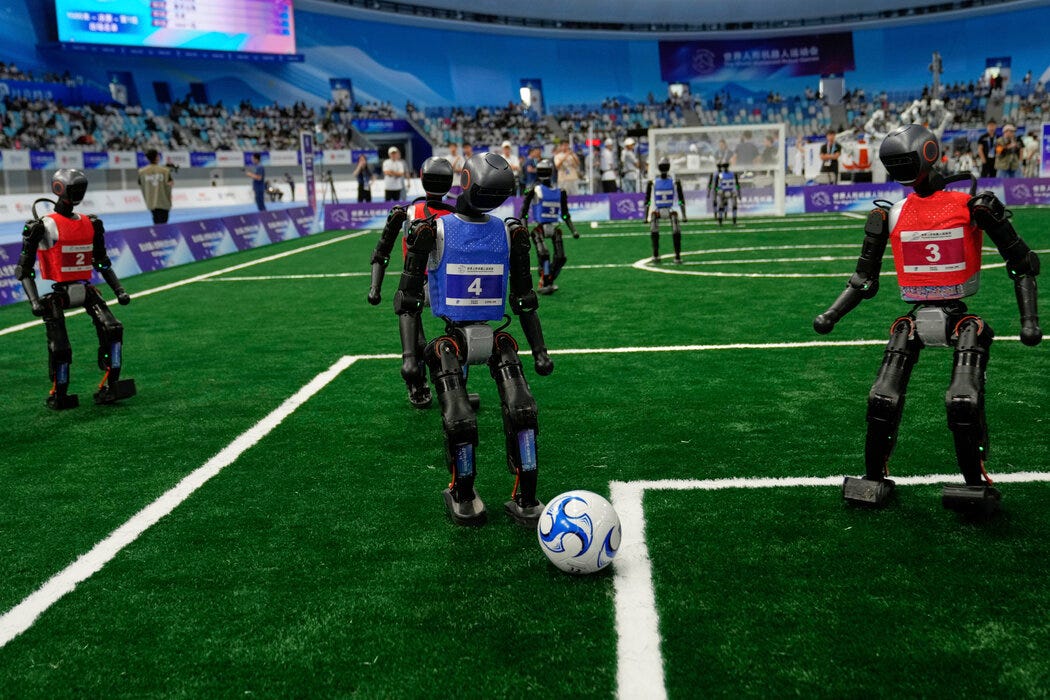
Finally, in the realm of social governance, the plan proposes using AI to upgrade urban infrastructure, create more efficient and proactive government services, and apply it to environmental monitoring and protection to help build a "Beautiful China."
The language of the document is revealing. Words like "reshape" and "revolutionary leap" signal an ambition that goes far beyond simple technological upgrades. The goal is a fundamental transformation of the underlying logic of production and daily life.
This blueprint reflects a national attitude of pragmatic optimism. It shows a firm confidence in technological progress and a clear commitment to ensuring that the fruits of AI development are shared by the entire population, aiming for a form of technological inclusion on a national scale. This optimism is not confined to policy documents; it is a palpable social phenomenon. It was visible in the massive crowds and sold-out tickets at the World AI Conference, where the public eagerly engaged with everything from humanoid robots to AI-powered smart glasses. It thrives in vibrant digital public squares like the Q&A platform Zhihu, where top researchers and millions of citizens actively discuss the latest breakthroughs. And it is demonstrated by the flood of new products and capital investment, indicating a broad consensus from corporations and the public alike that AI is the definitive next chapter of the nation's development.
Echoes of History: Why This Document Demands Attention
To an outside observer, such a grand plan might seem more aspirational than practical. Yet, China’s recent history provides compelling reasons to take it seriously. The story of "Guo Fa [2000] No. 18" is the key exhibit. In 2000, facing a nascent software sector, the state released this policy, which unleashed a comprehensive suite of support measures covering financing, tax breaks, talent development, and government procurement. It was the "first push" that ignited the engine of China's software industry, leading to two decades of explosive growth. This history proves that such top-level designs can have immense, transformative power.
The strategic logic also has a clear precedent. The 2015 release of "Guo Fa [2015] No. 28," better known as "Made in China 2025," underscored a long-term national strategy: the deep integration of emerging technology with the real economy, especially manufacturing. It established the principle that technology should not exist in a virtual vacuum but must serve to upgrade the country's industrial base. This year marks the culmination of that ten-year plan, and its achievements are tangible. The advanced military hardware displayed at the upcoming September 3rd parade, commemorating the 80th anniversary of the victory in the Anti-Fascist War, will serve as a powerful testament to its success. Much of the progress, such as the integrated sensor systems and electric propulsion seen in the new generation of tanks, is a direct result of a decade of focused industrial policy and civil-military fusion.

Viewed together, these historical markers reveal a consistent pattern. The "AI+" action plan is not a radical departure but a continuation of a proven model. It applies policy tools that have been tested and validated over time to a new technological frontier, all while adhering to the core national strategy of empowering the real economy.
The Policy on the Ground: Rongjiang County's "AI in Real-Time"
The most compelling evidence for the plan's potential, however, is found far from the halls of power in Beijing. It is found in places like Rongjiang, an ordinary county in the mountainous southwestern province of Guizhou. Rongjiang offers a perfect window into how a national policy document translates into action on the ground. The county’s response, both before and after the "AI+" plan was released, demonstrates a remarkable speed and synergy between the grassroots and the state.
This rapid adoption is fueled by a general public that is remarkably open to and eager for new technology. There is a widespread willingness to experiment with new applications, coupled with a confidence that potential risks will be managed effectively. This trust is significantly bolstered when new technologies are introduced by local Party cadres. For many citizens, the direct involvement of these officials serves as an assurance that the technology is intended for their benefit and that the government will be accountable for its outcomes.
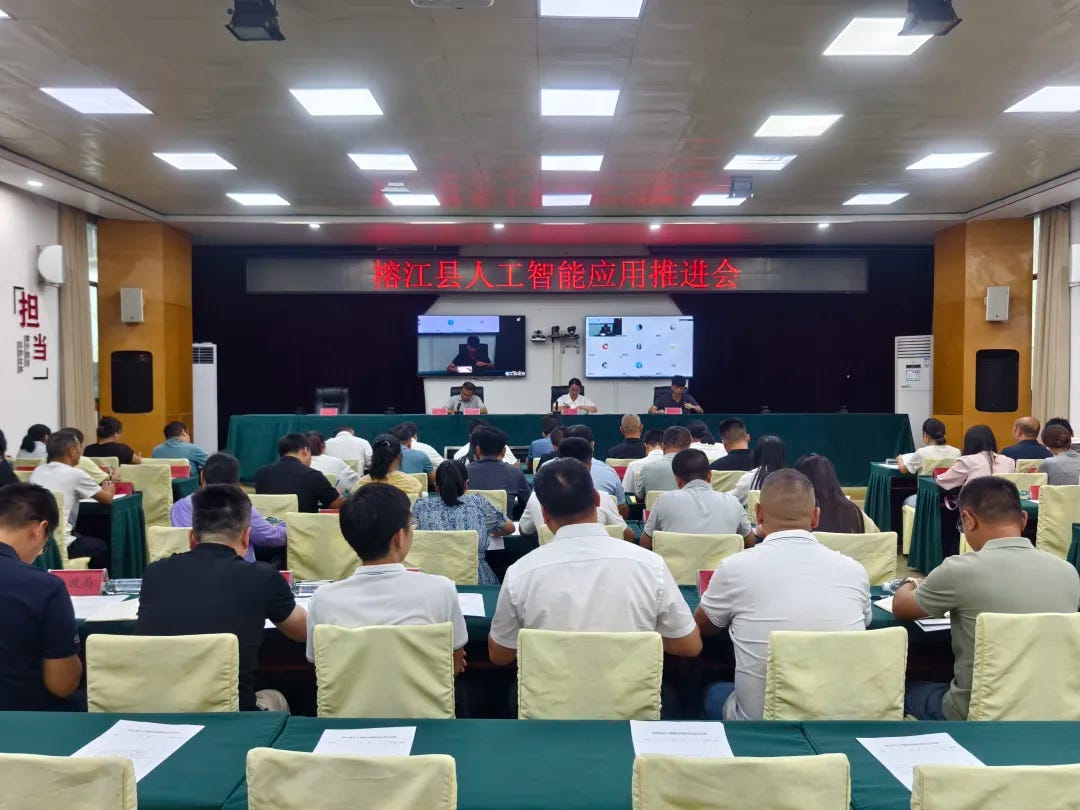
The execution is driven from the top of the local leadership. Days after the national plan was announced, Li Hongchang, a member of the County Party Standing Committee and Director of its General Office, was already touring the rural townships of Dingwei, Bakai, and Xinghua. He wasn't just delegating; he was on the ground, personally investigating the progress of AI popularisation and understanding the challenges faced at the village level.
This high-level push is matched by a concrete plan for mass mobilisation. The county is implementing a system of "AI pairing assistance" (AI bāngfú jiéduì), where tech-savvy officials are tasked with mentoring their colleagues. This goes beyond the government offices, extending into the villages themselves.
The objective is breathtaking in its ambition: "When visiting villages, strive to teach a 'knowledgeable person' (míngbái rén) in every household." For a county of 385,000 people, this implies a target of training roughly 100,000 citizens in the basic skills of AI application. This is not just a training program; it is a project of mass societal upscaling.
This is the secret to China’s policy execution: it is not a simple top-down command. It is a resonance between the strategic vision of the central government and the energetic, innovative mobilisation at the grassroots, all organised around a concrete, quantifiable goal of empowering the entire community.
Conclusion
China's approach to the AI era is a complete, integrated system. It combines a grand, forward-looking vision with a consistent historical logic and, most crucially, a powerful engine of grassroots execution that ensures the blueprint does not remain on paper.
For observers in the Global South and beyond, the story of Rongjiang is perhaps the most important part of the puzzle. It shows how, in China, a state document can, in a matter of days, become the daily work of a county official, the curriculum for a village training session, and a tangible goal for uplifting an entire community. This is the key to understanding how China says what it will do, and then does what it says.