Mind's New Voice
How China Made Brain-Computer Interfaces Accessible

I visited my aunt recently. She lay in her hospital bed, completely paralyzed, unable to speak or move. When I walked into the room, her eyes shifted slightly—the only sign she recognized me. We sat there for an hour, my family and I, talking to her, hoping she could hear us, knowing she couldn’t respond. It was one of the most painful hours of my life.
If there were a technology that could give her back her voice, how much would it cost? Who could afford it? The answer, it turns out, is $925.
The $925 Breakthrough
On December 13, 2025, at the Tsinghua Brain Science Forum, NeuroXess—a Shanghai-based neurotechnology company—announced that its “Triple-Full” brain-computer interface system had achieved clinical success. The patient was a 28-year-old man who had been paralyzed from the neck down for eight years following a spinal cord injury. Five days after surgery, he was controlling a computer cursor with his thoughts. By New Year’s, he had sent his first message through a robotic hand: “Happy 2025.”
The “Triple-Full” designation refers to three engineering achievements that make this system a milestone in the field. It is fully implanted—the entire device sits inside the body with no external wires. It is fully wireless—both power and data transmission happen without physical connections, eliminating the infection risks that plague conventional systems. And it is fully functional—capable of capturing, processing, and decoding neural signals to enable communication and control.
This is only the second brain-computer interface in the world with a built-in battery, and the first in China.
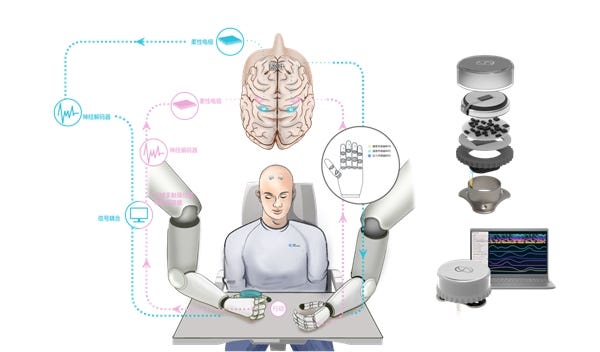
But here is the number that stopped me: the surgical procedure to implant this system costs 6,552 yuan—approximately $925. In April 2025, Hubei Province became the first jurisdiction in the world to establish government pricing for brain-computer interface procedures, treating this cutting-edge technology not as a luxury product but as a standard medical service. In November, Tongji Hospital in Wuhan performed the first surgery under this pricing framework.
Compare this to the United States. Neuralink, Elon Musk’s brain-computer interface company, currently offers its procedures free to clinical trial participants—but the estimated market cost when commercialized ranges from $40,000 to $50,000. Musk has spoken of eventually bringing the price down to $1,000 or $2,000, comparable to an Apple Watch. That vision remains unrealized. The gap today is roughly fiftyfold.
This is not merely a price difference. It represents two fundamentally different approaches to making transformative technology accessible. One path waits for commercialization to drive down costs over time. The other begins by defining the technology as a public medical service, establishing affordable pricing before widespread adoption, and letting policy lead the market. China has an estimated 20 million people with motor disabilities and 5.8 million with speech impairments—a potential beneficiary population larger than many countries.
From Expression to Recovery
Yet affordability is only the first layer of this story. When I sat with my aunt, what I truly wanted was not just to hear her speak again. I wanted to see her get better.
That hope, it turns out, may not be misplaced. At Tsinghua University, Professor Hong Bo’s team has been conducting clinical trials with a different brain-computer interface called NEO. What they discovered was unexpected: patients were not only learning to control external devices with their thoughts—their damaged nervous systems appeared to be healing.
One patient with a complete spinal cord injury underwent two months of training with the NEO system. The results were remarkable. As Professor Hong explained, every time the patient attempted to control the system with his thoughts, it triggered a coupling between descending and ascending brain signals—and this neural coupling appeared to promote repair at the site of spinal cord damage. After two months, the patient could pick up a wooden ball with his own hand—without any assistance from the brain-computer interface.
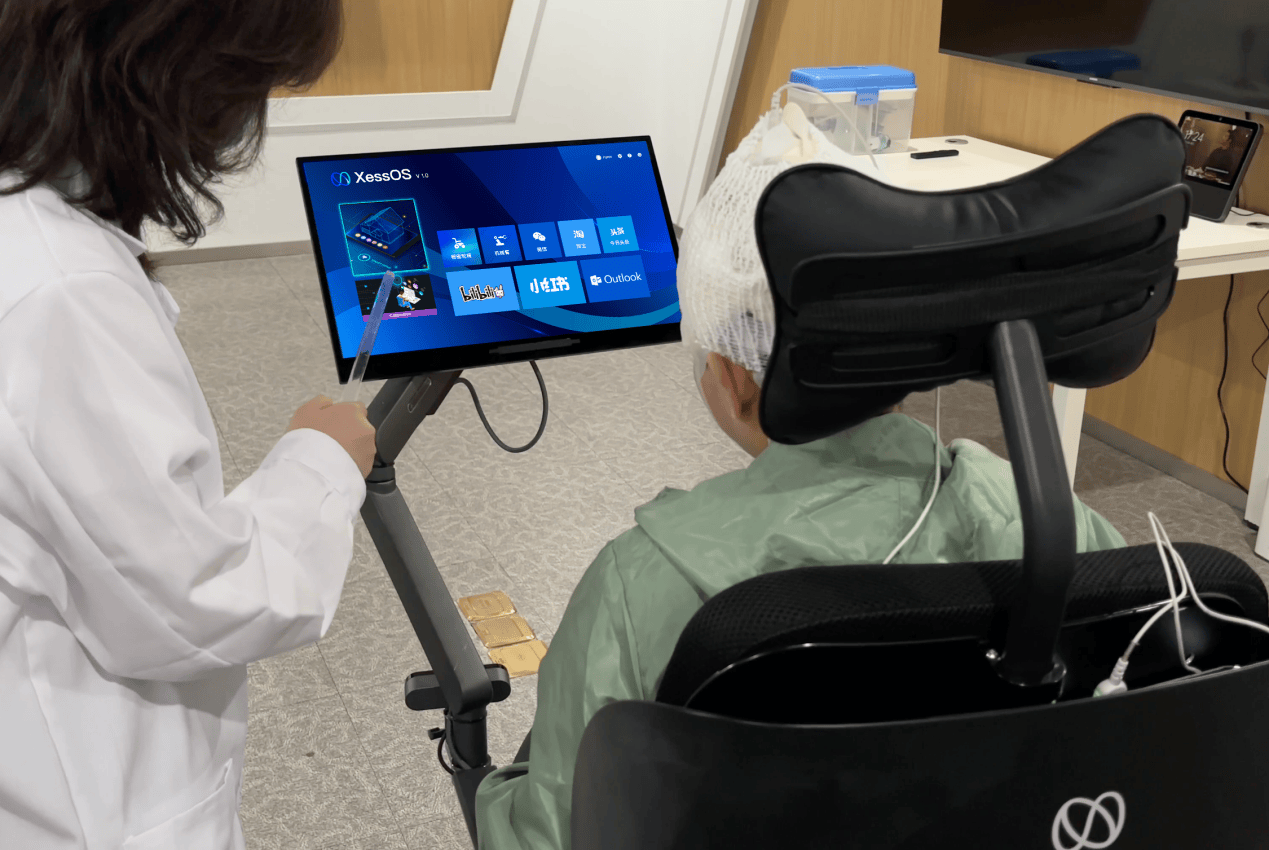
The brain, it seems, was relearning how to control the body. Imaging studies showed that activation had spread from the primary motor cortex to the parietal cortex, suggesting the formation of new neural pathways. This is neuroplasticity in action—the brain’s remarkable ability to rewire itself.
The implications are profound. If brain-computer interfaces can promote neural recovery, not merely compensate for lost function, then early access to this technology becomes a medical imperative rather than just an enhancement of quality of life. We are not talking about helping patients communicate more easily. We are talking about capturing a window for rehabilitation that might otherwise close. Nature magazine recognized this potential, listing the NEO system among the scientific developments to watch in 2025.
A Different Path
How did China achieve both technical breakthrough and radical affordability within the same system? The answer lies in deliberate choices—both in engineering philosophy and in policy design.
Chinese brain-computer interface teams have pursued what might be called a “safety-first” approach, in contrast to Neuralink’s emphasis on maximizing channel density and performance. NeuroXess, for instance, places its battery not in the skull but in the chest, using a split-body design that keeps heat-generating components away from the brain. The electrodes used by Chinese systems are one-fifth to one-seventh the size of Neuralink’s, with flexibility reportedly 100 times greater. The NEO system goes further, placing electrodes outside the dura mater—the tough membrane surrounding the brain—eliminating the need to penetrate brain tissue at all.
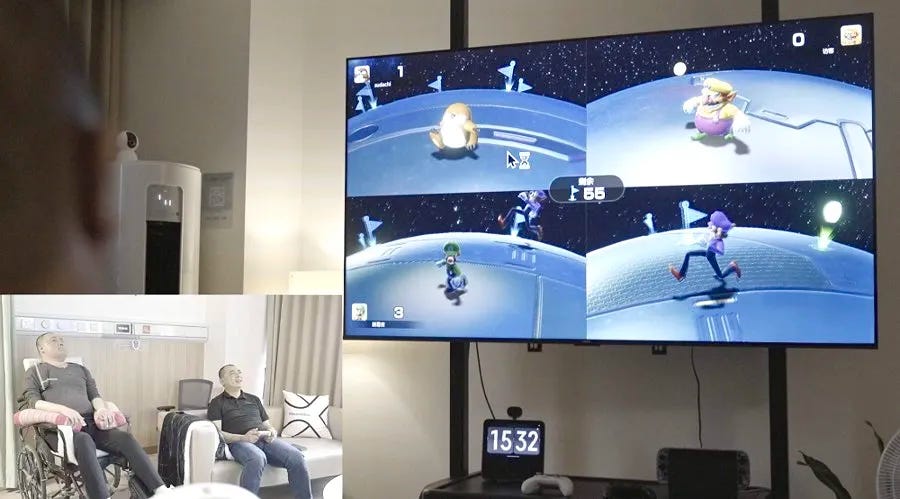
These are not compromises born of technological lag. They are engineering choices that prioritize patient safety and rapid recovery. NeuroXess patients typically transfer from intensive care to a general ward within one day of surgery. NEO patients are often sitting in wheelchairs within three days.
This technical foundation is matched by systematic policy support. In August 2025, seven Chinese government ministries jointly issued guidelines for brain-computer interface industry development, setting targets for technological breakthroughs by 2027 and global leadership by 2030. The Hubei pricing framework, the fast-track approval processes for innovative medical devices, the coordination between research hospitals and technology companies—these form a complete chain from policy to practice.
When Hope Becomes Accessible
The next time I visit my aunt, I will tell her these stories. She may not be able to respond, but I believe she will understand. Hope is arriving.
The implications extend far beyond China. According to global health data, 87 percent of stroke-related disability occurs in low- and middle-income countries. Three-quarters of people needing neurological care in these regions cannot access it. Brain-computer interfaces offer tremendous potential to restore dignity and function to patients worldwide—but only if the technology is affordable and accessible.
What China’s experience suggests is this: when a transformative technology is defined first as a public medical service rather than a premium consumer product, the path to widespread access looks fundamentally different. The technical challenges remain immense. The neuroplasticity findings are preliminary and require much more validation. But the direction is clear, and the first steps have been taken.
Making hope accessible—that, in itself, is meaningful.
It's interesting how you framed this whole piece by opening with your personal experience with your aunt, it realy grounds the incredible tech in human reality and makes the question "who could afford it?" hit different. That patient sending "Happy 2025" through a robotic hand after eight years of paralysis is such a powerful image, truly showcasing the transformative power of AI and neurotech for human dignity.